When Institutions Cower:
The Stakes for Students, Teachers, and Democracy — Deep Dive 2025


As the new academic year unfolds, the urgency is crystal clear. We are in a moment when decisions made in Washington, in state capitols, in university president’s offices are reshaping not merely policies, but lives, especially for students and teachers in marginalized communities. This is about more than “programs” or ideology: it is about whether our educational institutions still believe in their own mission to serve all students, preserve truth, and strengthen democracy.
Below: a deeper look at the numbers, the student voices, the institutional betrayals, and what’s at stake if we stay quiet.
The Federal Shift: Data, Policy Moves, and Their Implications
First, what the government has done, or set in motion, that is altering the ground under secondary and higher education.
Major Cuts and Mandates
DEI Contracts and Grants Cut
The U.S. Department of Education has paused or cancelled 89 contracts worth about $881 million, and 29 training grants related to diversity, equity, and inclusion accounting for $101 million. These were funding teacher‐training on issues like oppression and privilege, and research tied to student outcomes. PoliticoThreats to Withhold Federal Funding Over DEI
Schools (both K-12 and higher ed) have received demands or ultimatums to certify that they are not engaging in “discrimination” under DEI practices or risk losing funding. This includes directives to stop using race as a factor in admissions, financial aid, hiring, or housing. They often have only two weeks to comply. Arkansas Advocate+3WTTW News+3New Hampshire Bulletin+3Massive Delays, Rescissions, and Reallocations
The Trump administration has delayed or withheld billions in K-12 funds, including pandemic relief and regular grants (e.g. ESSER, Title II, Title III, Title IV). Center for American Progress+1
Minority-Serving Institutions (MSIs), especially Hispanic-Serving Institutions, are seeing cuts of hundreds of millions of dollars tied to grant programs because their eligibility depends on racial/ethnic enrollment levels, which are now being legally challenged. AP News+2EdTrust+2
Research Disruption
Projects not explicitly about DEI but whose work touches student mental health, literacy, attendance, or school quality are being paused or cancelled. Researchers report anxiety, uncertainty, loss of data. The 74 MillionRegulatory & Accreditation Pressure
The Department of Education’s guidance now strongly discourages, or threatens consequences for, any race-conscious programming. Accreditation bodies are under pressure to align with this shift, meaning institutions risk losing eligibility for federal student aid or research funding if they don’t comply. Higher Ed Dive+2EdTrust+2
What the Data Tells Us About Impact
Students of color now make up more than 50% of K-12 students and about 45% of undergraduates in U.S. colleges. EdTrust
In K-12: over $45 billion was appropriated for fiscal year 2025, but significant portions of that, more than $4 billion, remain withheld or delayed for programs that support English learners, summer & after-school enrichment, student mental health, migrant education. Center for American Progress
Schools in rural, high-poverty, or predominantly Black, Latino, Native American communities rely heavily on federal funding for mental health, academic enrichment, and remedial supports. Delays or rescissions in funding have already forced some districts to cut staff or postpone essential programs. Arkansas Advocate+1
Student & Faculty Voices: What It Feels Like
Numbers hurt, but stories pierce. Here are voices from the ground, from students and educators trying to make sense of what is being lost.
“I didn’t sign up to feel like someone is erasing me. When my DEI office gets shut, it’s like my story no longer matters.”
-Student of color at University of Michigan, reflecting on the closure of its DEI Office and related programs. (Reported in articles about those rollbacks.) Reuters+1“Orientation week was more than icebreakers. It was when I first saw people who looked like me, who had similar histories. Now those events are gone. It’s hard to walk into class feeling invisible.”
-A first‐year student at Case Western Reserve University. (Re DEI rollout cuts at that campus.) AP News
“We are pausing research that could tell us how to catch children falling behind in math or reading. But now we are told that research is less important if it involves anything even remotely related to equity or race.”
-One researcher speaking under condition of anonymity. (From articles on paused research in education studies.) The 74 Million“This isn’t about money only. It is about identity, trust, and whether a student feels safe enough to ask for help. When the institution you thought would protect you cowers, the harm is real.”
-Faculty member at Ohio State, after announcement of closure of DEI offices and staff cuts. Higher Ed Dive+1
Universities That Have Caved, or Made Serious Retreats
Here are concrete institutional cases, what was lost, and what the ripple effects are.
Institution / What They Did / Are Doing / Consequences & Community Response
University of Michigan: Closed its DEI office; ended its flagship Office for Health Equity and Inclusion. Cited federal orders and funding threats. Reuters+1 Students and faculty protested. Students say programs like LEAD (leadership & mentorship), orientation events for underrepresented students, support services are gone or severely reduced. Feelings of invisibility and fear among students of color.
Ohio State University: Dissolved all DEI offices and programming; eliminated 16 professional DEI staff. Pre-compliance with Ohio Senate Bill 1 and federal pressure. Higher Ed Dive+2Wikipedia+2 Protests (“Shred SB1”) with students, faculty. Concerns about classroom content, loss of mentors, loss of supports. Chilling effect: course materials under scrutiny; some faculty expressing self-censorship.
Case Western Reserve University: & othersRolled back DEI orientation events; cut scholarships or programs oriented to marginalized students. AP News Students report isolation, loss of connections, reduced safety nets. For some, the difference between staying in school and feeling they belong is gone.
Many Other Colleges: Rebranding DEI or moving programs under different names; shifting responsibilities of student support functions to other offices; eliminating DEI statements in hiring. AP News+3PBS+3EdTrust+3 Gradual erosion of inclusion. Institutions hoping that rebranding or burying support functions will reduce risk, but result is the same for many students.
The Implications: Students, Teachers, and Communities
What we are seeing so far is only the start. Below are what’s already happening, what is likely to happen, and what may become permanent unless we act.
For Students
Belonging, Mental Health, Identity
Support structures, DEI offices, cultural centers, mentorship, community events, do more than decorate campus. They are lifelines. Without them, many students describe feeling unseen, unsafe, or unvalued. For first-generation, low-income, or formerly marginalized students, that sense of belonging can influence whether they persist or drop out. Students of color already face higher rates of anxiety, depression and imposter syndrome when supports are removed. Anecdotal reports are already confirming these trends. AP News+1Academic Access & Support
Scholarships, mentoring, academic enrichment programs that target underrepresented groups often rely on DEI or race-conscious eligibility or oversight. Cuts to those, or removal of references to race in these programs, mean fewer targeted supports. For example, some orientation or bridge programs that help underrepresented students transition into college are being scaled back or cancelled entirely. AP News+1Loss of Historical & Civic Literacy
When universities or K-12 schools avoid or remove content about systemic racism, colonialism, Indigenous histories, or require “viewpoint diversity” that privileges certain perspectives, students lose the ability to see themselves in the story and to understand how the past shapes present injustices. This degrades critical thinking and erodes democratic readiness. (See how Ohio’s SB1 and similar laws restrict “controversial beliefs” and reshape what can be taught. Wikipedia+2Wikipedia+2)Health, Safety, Support Services
Some universities provided community health, mental health, gender-affirming care (through DEI or cultural center-led channels). With closures of DEI offices, or risk aversion due to legal / funding threats, these services are in jeopardy. Some students report delays or losses of such supports. The consequences are not academic only, they are about wellbeing. AP News+1
For Teachers, Faculty, and Institutional Culture
Academic Freedom & Self-Censorship
Faculty report altering syllabi, avoiding certain topics, refusing to apply for grants that might attract scrutiny. When policies are vague, the risk is amplified: what counts as “race preference”? What counts as “ideological instruction”? The chilling effect is already cited by multiple faculty in public and private institutions. Higher Ed Dive+1Loss of Equity-Oriented Positions & Support Staff
DEI offices don’t just host events—they often employ staff that mentor students, offer counseling, manage safe spaces, assist with grievance processes. Eliminating or downgrading these offices means losing that capacity. Reassigning parts of these roles to other departments may mean fewer resources, less specialized training, and weaker accountability. Higher Ed Dive+1Recruitment, Retention, Reputation
Institutions that abandon inclusion risk alienating students, faculty, and donors who during recent years chose them in part because of their commitment to equity. Over time, that affects diversity among faculty and student bodies, morale, trust, and institutional mission. Students often pick colleges not just for prestige or cost, but for values. When the values appear hollow, decisions about where to enroll or where to work may shift.
For Democracy, Equity, and Long-Term Outcomes
Widening Achievement Gaps: Students from low-income or marginalized groups already face higher barriers, funding cuts, program discontinuities, less stable supports widen the gap in graduation rates, retention, and post-graduation opportunities.
Erosion of Civil Rights Protections: The Office for Civil Rights (OCR) has historically enforced protections under laws like Title VI, Title IX, ADA. When DEI initiatives are attacked, OCR’s role is undermined. When guidance is vague, enforcement slow, or funding threatened, rights may become paper promises.
Weakening of Civic Engagement and Critical Thought: A democracy depends on citizens who know history, who recognize injustice, who have space to question power. When curricula are sanitized, historical injustices minimized, or controversial content restricted, students are less prepared to be active, informed citizens.
Why Many Institutions are Folding and What That Reveals
Why are even prestigious or well‐resourced universities making these cuts or acquiescing?
Financial Pressure & Risk of Losing Funding
Federal aid, research grants, accreditation eligibility are enormous parts of many universities’ budgets. Threats of losing them are not hypothetical. Universities calculate risk. Even if fully believing in their values, many decide the cost of resisting (legal challenges, frozen grants, accreditation loss) is too high.Legal Uncertainty & Threat of Litigation
Supreme Court rulings like Students for Fair Admissions v. Harvard have tightened constraints on race-conscious admissions. Guidance from the Department of Education and executive orders add vagueness: institutions may not yet know what exactly is illegal, but fear enforcement, lawsuits, or losing accreditation. That fear often leads to preemptive pulls on DEI.Political Pressure & Public Opinion
Some state governments have passed laws restricting DEI, or “viewpoint diversity” requirements. Legislators challenge university boards, threaten budgets. Public rhetoric frames DEI as “reverse discrimination” or “ideological” rather than equity work. Universities have boards, trustees, and donors sensitive to politics.Mission Drift and Institutional Safety
Upholding values sometimes means conflict. Some administrators choose what they perceive as safety, avoiding controversy, over mission. Over time, that shifts what the institution stands for. When DEI work is treated as optional or dangerous, it gets deprioritized.
Universities Trying to Resist, or Adapt Strategically
Not every institution has folded, or at least, not entirely. Here are efforts and strategies being used by those trying to hold the line.
Legal Challenges: Some universities, faculty groups, and states are filing suits against the Department of Education or state laws that attempt to force them to abandon DEI programs or risk funding.
Rebranding vs. Retooling: Rather than eliminate supports, some universities are renaming or restructuring DEI offices (e.g. under “Student Success,” “Access & Opportunity,” or “Civic Engagement”) in the hopes of preserving core support functions while avoiding direct confrontation.
Maintaining Core Supports: Programs that are deeply integrated, mental health, disability services, first-generation student support, are being defended as non-negotiable. Some institutions are doubling down on those, ensuring students know which services will remain.
Amplifying Student & Community Voice: Student protests, parental advocacy, media exposure are key. Institutions are under pressure not just from government, but from their own communities, students, alumni, faculty, demanding accountability.
What Educators & Parents Need to Know and Demand
For those of you reading this as teachers, administrators, parents, caregivers: here is a checklist of what to watch for, what to ask, and what to demand.
Action Area / What to Watch / Ask / What to Demand
Transparency: Are your school or college leaders issuing clear statements about what supports, DEI-based or identity-affirming programs, they will cut or retain? Are there deadlines being given by the Department of Education that threaten cuts in funding?Insist on clear lists of programs being reviewed, clear metrics, and public notice to students & staff. Require impact assessments before cuts.
Data & Accountability: What is the institution’s data on student retention, graduation, and well-being across groups (race, income, disability, first-generation)? Are there baseline metrics?Demand regular reporting of these metrics. Ask for assessment of how cuts will affect marginalized groups.
Legal Rights: Do students and staff know their rights under laws like Title VI, Title IX, ADA, Section 504? Are there legal aid, advocacy group connections?Demand legal due process for decisions; challenge vague directives; support or join lawsuits when institutional missions are being undermined.
Student Support Services: What is happening to orientation programs, cultural centers, mentoring, mental health services, disability support? Are any being shuttered or reassigned? Tell leadership these services are essential. Advocate for funding and staffing to remain. Back student groups who are working to preserve or rebuild them.
Academic Freedom & Curriculum: Are courses being dropped, renamed, or made optional? Is content being censored? Are faculty fearful of teaching certain topics?Demand protections for academic freedom. Support faculty who teach difficult or marginalized histories. Push for curricula that is inclusive, rigorous, truthful.
Public Voice & Advocacy: What are students, parents, faculty saying? Are their concerns heard? Is there organized protest or dialogue? Organize. Write letters. Use media. Vote. Support laws and policies that protect educational equity. Share stories.
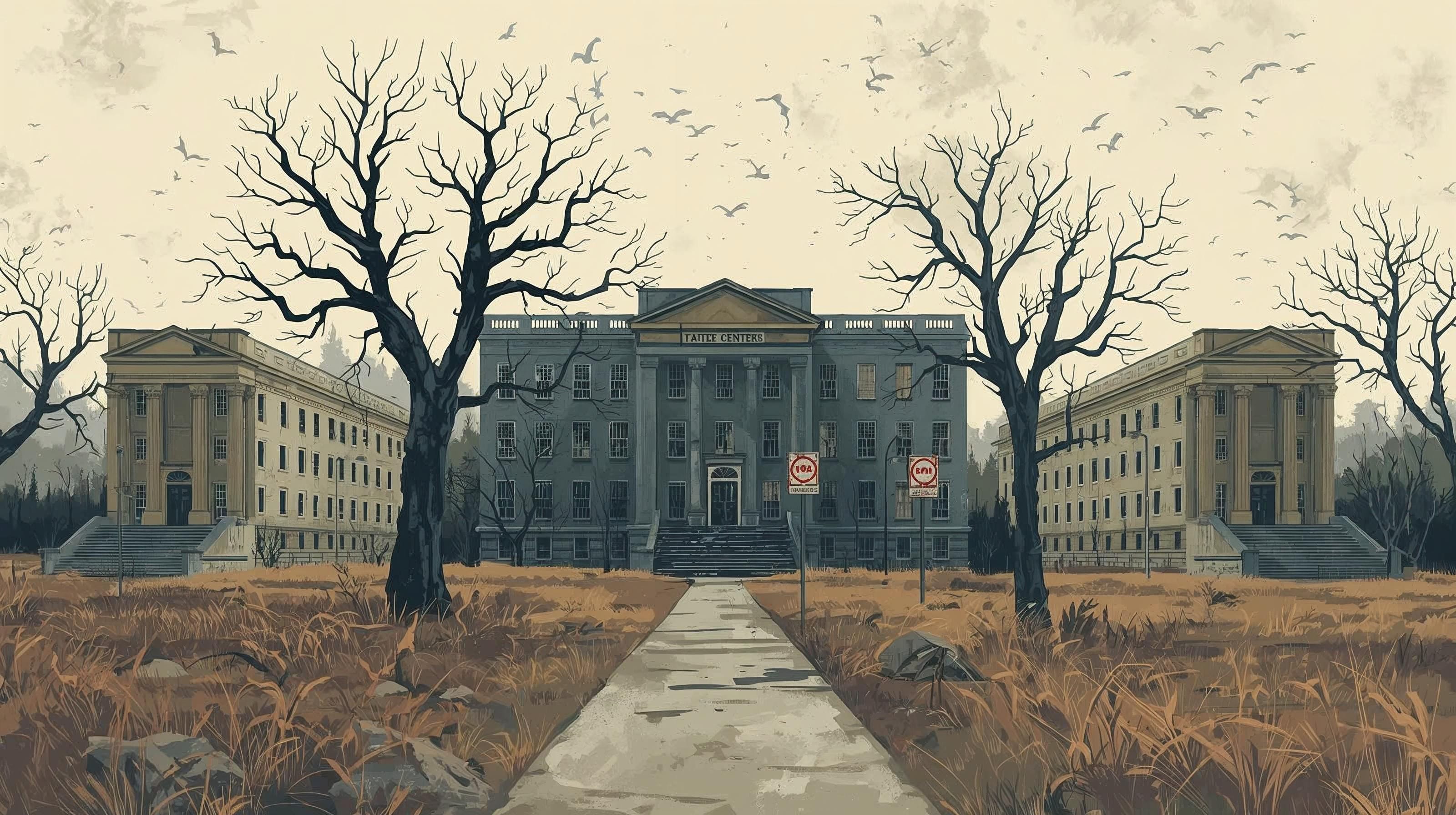
What It Will Look Like If We Let This Roll
To make this real, consider the possible scenario in the next 3-5 years if current trends continue unchecked:
Cultural centers, mentorship programs, safe centers for identity-based communities become rarities.
Scholarships and financial aid that address historical inequity and structural disadvantage become more restricted or eliminated.
Curricula that include systemic inequality, racism, colonial history become sidelined; history classes return to narrower “founding fathers” treatment, avoiding unpleasant truths.
Students from underrepresented or marginalized backgrounds stop seeing themselves in faculty, syllabi, support staff; mental health crises increase; retention among these groups declines.
Research on equity, student voice, race, gender, marginalized identities is defunded or made invisible. Funding agency culture shifts to avoid anything that can be attacked politically.
Democracy weakens not from overt closure, but from invisibility, exclusion, sanitized truth, and lost trust.
Why This Needs to Break Your Heart And Ignite Your Resolve
Because these are not “policy issues”, these are lives. These are students who should be stepping into the world more confident, more empowered, more heard, but instead feel smaller, silenced, invisible.
Because the legacy of a university is not in its endowment, its rankings, or its buildings, it is in how it changes lives, how it preserves truth, how it lifts those who are at greatest risk of falling.
Because money, law, policy, they are levers. But values, courage, vision, they are what hold communities together when levers break.
Conclusion: What We Must Insist On
That education remains a sacred site of inclusion, truth, and diverse histories, not a battleground where the marginalized are expected to shrink.
That institutions reassert their core mission: service to all students, especially those whose voices have been silenced.
That parents, educators, students, and community allies become watchdogs and advocates, not letting these rollbacks happen in the dark.
That democracy depends not only on institutions that endure, but on institutions that resist when principles are under attack.
The cost of silence is high. The stakes are real: our schools, our students, our teachers, and our democracy deserve better. If institutions cannot stand for their students, then the question becomes: what are they for?
Full Citations & Sources
“Education Department pauses research contracts and cuts DEI training grants.” Politico. February 10, 2025. Politico
“University of Michigan shuts DEI office, citing Trump orders and funding warning.” Reuters. March 28, 2025. Reuters
“University of Michigan shutters its flagship diversity program.” The Guardian. March 28, 2025. The Guardian
“DEI rollbacks hit campus support systems for students of color.” Associated Press. (Date in 2025). AP News
“A surge of DEI cuts hits colleges across the US.” Higher Ed Dive. February 27, 2025. Higher Ed Dive
“Public Education Under Threat: 4 Trump Administration Actions to Watch in the 2025-26 School Year.” American Progress. August 27, 2025. Center for American Progress
“Federal education cuts and Trump DEI demands leave states, teachers in limbo.” Arkansas Advocate. April 16, 2025. Arkansas Advocate
“Eliminating DEI programs in Schools and Universities is an economic and educational disaster in the making.” EdTrust. February 17, 2025. EdTrust
“Stunned Education Researchers Say Cuts Go Beyond DEI, …” The 74 Million. February 13, 2025. The 74 Million
“Donald Trump Administration Gives Schools 2 Weeks to End DEI Programs or Risk Losing Federal Money.” Associated Press. February 18, 2025. WTTW News
“As Trump’s deadline to eliminate DEI nears, few schools …” Associated Press. February 27, 2025. AP News
“Trump administration boosts HBCU funding after cutting grants for Hispanic-serving colleges.” AP News. Recent (2025). AP News
Data on student population demographics (students of color proportions in K-12 and higher ed). EdTrust. EdTrust
Ohio Senate Bill 1 & its implications for DEI offices and academic freedom at Ohio State. Higher Ed Dive, Arkansas Advocate, local reporting.